
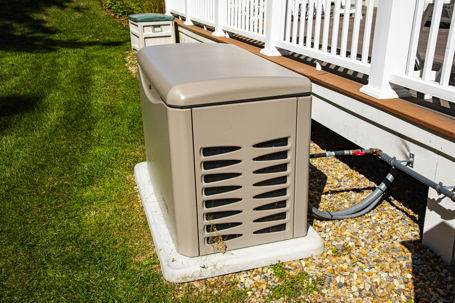
When the power goes out in central Indiana, the difference between a generator that works and one that disappoints usually comes down to one thing: size. Too small, and it can't run what you actually need. Too large, and you're paying for capacity you'll never use. Before you request a quote, it helps to understand how sizing works. At Knee's Electrical Service, we've been installing Generac systems throughout Marion, Kokomo, Muncie, and Warsaw since 1971, and sizing the system correctly is where every good installation starts.
How Generator Sizing Actually Works
Generator size is measured in kilowatts, and the right number depends on what you want powered when the electricity goes out. A generator sized for a few essential circuits looks very different from one sized to run your entire home without you noticing an outage at all. The calculation starts with adding up the wattage of the appliances and systems you want covered: refrigerator, well pump, furnace blower, sump pump, and anything else that can't wait. From there, a licensed electrician accounts for starting wattage, which is the extra surge some appliances need the moment they kick on. This is why a generic online generator wattage guide only gets you partway there. Every home's panel, appliances, and layout are different, and an accurate size comes from an in-home load assessment, not a chart.
Essential Circuits vs. Whole-Home Coverage
Homeowners generally land in one of two camps. The first wants coverage for essentials only: refrigeration, heat, lights, and a sump pump, enough to get through an outage safely and comfortably. The second wants the whole home covered, including HVAC, water heater, and every outlet in the house, so daily life continues without adjustment. Neither choice is wrong. It comes down to budget, how often your area loses power, and how much disruption you're willing to tolerate. If you're searching for the best generator for a power outage in your specific home, that answer depends on which of these two outcomes matters more to you.
Why Timing Matters Before Winter
Central Indiana winters bring the ice and wind events most likely to knock out power for extended stretches, and generator installations take longer to schedule and complete than most homeowners expect. Between the load assessment, permitting, the concrete pad, and the gas line connection, ordering in September or October gives you a real shot at being ready before the season's first major outage. Waiting until a storm is in the forecast usually means waiting in line behind everyone else who had the same idea. A properly sized whole-home standby generator typically runs $10,000 to $18,000 installed, and the exact number depends on the size you need and the distance between your panel, the generator, and your gas meter. For a full cost breakdown, see our electrical pricing guide.
When to Call a Professional
Sizing a generator correctly isn't something to guess at from a chart or a big-box store display. A licensed electrician looks at your panel's capacity, your home's actual electrical load, and the realistic distance for running conduit and gas line, then gives you a size and a firm price based on your home specifically. That's the only way to know the system you install is the system you actually need.
Ready to find out what size generator your home needs? Call Knee's Electrical Service at (765) 201-7220 or schedule your free load assessment online, serving Marion, Kokomo, Muncie, and Warsaw.