Electrical fires don't usually start with dramatic sparks or flames. More often, they begin quietly behind walls, inside outlets, or within the electrical panel—places homeowners rarely see. By the time smoke becomes noticeable, heat may have been building for minutes, giving a fire the opportunity to spread before anyone realizes there's a problem.
That's what makes electrical fires different from many other household hazards. Small issues like a loose connection or an overloaded circuit can go unnoticed for years until they create the right conditions for a fire.
Understanding the most common causes of electrical fires can help you recognize problems earlier and know when it's time to have your home's electrical system inspected.
Why Electrical Fires Often Go Undetected
Unlike a kitchen fire or an appliance malfunction, electrical fires frequently begin inside hidden spaces.
Electrical wiring runs through walls, ceilings, crawl spaces, and junction boxes where homeowners can't easily see signs of trouble. If heat develops around wood framing, insulation, or other combustible materials, a fire can begin long before smoke reaches a living area.
Many people assume their circuit breaker will automatically stop any dangerous electrical problem.
That's only partly true.
A standard breaker is designed to respond to excessive current or a direct short circuit. It doesn't detect every hazardous condition, especially electrical arcing—a small jump of electricity between loose or damaged conductors that can generate intense heat without drawing enough current to trip the breaker.
Aging Wiring Is One of the Biggest Fire Risks
A home's electrical system naturally changes over time.
As wiring ages, the insulation surrounding the conductors becomes brittle. Years of heating and cooling cause wires and terminal screws to expand and contract, gradually loosening electrical connections throughout the system.
Those loose connections create resistance.
Resistance creates heat.
Over time, that heat can damage nearby insulation or allow electrical arcing to develop inside walls where homeowners never notice it.
Older homes may also contain wiring systems that deserve special attention.
Knob-and-tube wiring, once common in early homes, wasn't designed for today's electrical demands. Likewise, aluminum branch wiring installed during portions of the 1960s and 1970s requires specialized connectors and maintenance because it expands, contracts, and oxidizes differently than copper wiring.
None of these systems automatically means a home is unsafe—but they should be evaluated periodically, especially if the electrical system has never been updated.
Modern Homes Use More Electricity Than Older Systems Were Built For
Even if the wiring is still in good condition, today's electrical demands are much higher than they were decades ago.
Home offices, gaming consoles, large televisions, smart devices, countertop appliances, and chargers all compete for power throughout the day.
In older homes, many of those devices may be sharing circuits originally intended for only a handful of lights and small appliances.
Common situations that increase electrical fire risk include:
- Running multiple high-demand appliances on one circuit
- Plugging portable space heaters into overloaded outlets
- Using extension cords as permanent wiring
- Connecting refrigerators, microwaves, or window AC units to power strips
- Running cords under rugs or behind heavy furniture, where heat becomes trapped
These practices don't always cause an immediate problem, but sustained electrical loads can gradually overheat wiring and connections over time.
Outlets, Appliances, and Light Fixtures Can Become Fire Hazards
Not every electrical fire starts inside the walls.
Sometimes the first problem develops where electricity enters or leaves a device.
Loose outlets can allow tiny arcs of electricity to form whenever plugs move slightly inside the receptacle. Worn appliance cords may expose conductors or develop internal damage that creates excessive heat.
Lighting also deserves attention.
Every light fixture has a maximum recommended bulb wattage. Installing bulbs that exceed that rating generates more heat than the fixture was designed to handle. Over time, that excess heat can damage wiring and increase the risk of ignition, particularly near curtains, insulation, or stored items.
Even seemingly minor problems deserve attention because electrical heat often builds gradually rather than all at once.
Warning Signs You Should Never Ignore
Electrical systems often provide clues before something more serious develops.
If you notice one warning sign, it doesn't always mean a fire is imminent. However, several symptoms together deserve prompt attention.
Watch for:
- Breakers that trip repeatedly
- Flickering or dimming lights
- Warm outlets or switch plates
- Burning or "hot" electrical odors
- Buzzing or crackling sounds
- Sparks when plugging in appliances
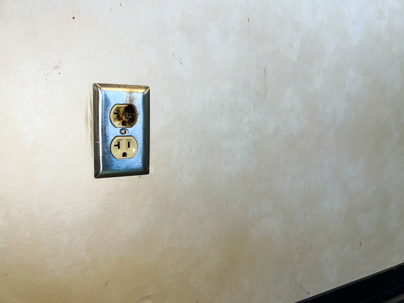
- Brown or scorched outlet covers
These issues frequently indicate overheating, loose connections, or electrical arcing behind the surface.
Rather than waiting for the problem to become obvious, it's safer to have these symptoms investigated while repairs are still relatively straightforward.
How Professional Electrical Upgrades Reduce Fire Risk
Preventing electrical fires isn't about replacing every wire in your home.
It's about identifying weaknesses before they become dangerous.
An electrical inspection allows an electrician to evaluate your panel, wiring, outlets, switches, grounding, and visible electrical components for signs of wear, overheating, or outdated equipment.
For many older homes, improvements that may significantly reduce fire risk include:
- Electrical panel upgrades to support modern electrical loads
- Replacing deteriorated wiring or damaged connections
- Installing dedicated circuits for high-demand appliances
- Adding Arc Fault Circuit Interrupter (AFCI) protection where appropriate
- Updating outdated outlets and switches
These upgrades not only improve safety but also help electrical systems better handle the way modern households use electricity every day.
Don't Ignore the Early Warning Signs
Electrical fires rarely happen without warning. More often, they begin with small issues that homeowners overlook because everything still appears to be working.
If you've noticed flickering lights, warm outlets, recurring breaker trips, or other unusual electrical behavior, having the system inspected can help identify hidden problems before they become much larger repairs.
Whether your home needs an electrical inspection, electrical panel upgrade, wiring repairs, or circuit improvements, Knee's Electrical Service can help evaluate your system and recommend practical solutions based on your home's condition.
Call (765) 201-7220 today or schedule your home's electrical safety inspection online.