
The wind is howling, the trees are snapping against the windows, and then, in an instant, your Marion home goes dark. The hum of the furnace or air conditioner stops, the sump pump goes silent, and the house feels strangely quiet except for the storm outside. In those first few minutes, most homeowners are thinking about flashlights and phone batteries, not how long the power might stay out.
After a few hours without electricity, the real problems start. Water can creep into a basement because the sump pump is off, food in the refrigerator warms up, and anyone who relies on powered medical equipment or needs steady heating or cooling can quickly become uncomfortable or unsafe. During Marion’s storm season, these are not rare “once in a lifetime” events. Local storms can knock down branches, ice can weigh on lines, and outages can last long enough to create serious disruption.
At Knee's Electrical Service, we have been working in Marion and surrounding communities since 1971, so we have watched how local weather and the power grid affect real homes over many decades. Our work includes wiring, panel upgrades, and the backup generator systems that keep critical circuits running when the utility power drops. In this guide, we want to share what we have learned about backup generators during Marion’s storm season so you can decide what level of protection makes sense for your home and your family.
How Marion’s Storm Season Puts Your Home At Risk
Every part of Indiana sees its share of rough weather, and Marion is no exception. Strong thunderstorms can roll through with high winds that break branches into lines. In colder months, freezing rain and ice can collect on trees and power lines, adding weight until something gives. Even if the storm itself passes quickly, the work of clearing downed lines and restoring power can take much longer, especially if multiple neighborhoods are affected at once.
Inside the home, many of the most important systems depend on steady electricity. A sump pump in a Marion basement might run hard during a heavy rain, but it only takes one outage at the wrong time for water to start rising. Well pumps, if you are on a private well, stop as soon as the power does, which means no running water for drinking, cooking, or flushing. Furnaces, boilers, and air handlers need electricity for blowers and controls even if they use gas for heat, so a winter outage can leave a home cold long before the temperature outside improves.
We also see the slower problems that do not show up right away. Refrigerators and freezers that sit without power can quickly reach unsafe temperatures, risking hundreds of dollars in spoiled food. Families often move everyone into one or two rooms for warmth or light, using candles or battery lanterns that can create fire or carbon monoxide risks if they reach for unsafe options. After serving Marion since 1971, we have seen storms that knocked power out for just an hour and others that caused longer disruptions, and the homes that fare best are the ones that prepared for those longer outages.
What A Backup Generator Really Does During A Storm
A backup generator is simply another source of electricity that steps in when utility power fails. For a homeowner, the practical question is not “What is a generator?” but “What will it actually keep running when the lights go out?” Portable units and permanently installed standby generators both produce power, but they do it in very different ways and with very different levels of convenience during a storm.
A portable generator usually sits in a garage or shed until it is needed. When the power goes out, you wheel it outside, start it manually, and run extension cords to a few appliances. Some homeowners add a manual transfer device so the portable unit can feed selected circuits instead of just loose cords. This approach can work in some situations, but during high winds, heavy rain, or ice, going outside to move, fuel, and start a portable generator is not always easy or safe.
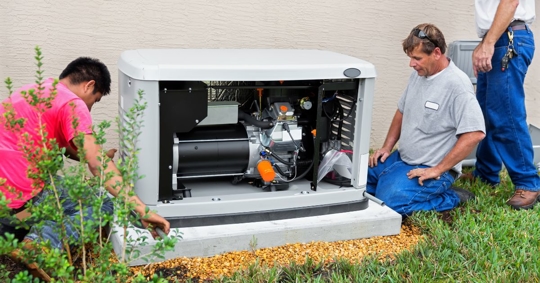
A standby generator is installed permanently outside the home, typically tied to a natural gas or propane supply. It connects to your electrical system through an automatic transfer switch that constantly monitors utility power. When the switch senses that the grid power has failed, it disconnects your home from the utility, signals the generator to start, and then feeds power to the circuits that have been selected to run on backup. All of this typically happens within seconds, without you stepping outside into the storm.
In Marion homes, those backed-up circuits are usually the ones that matter most in a storm. We often see homeowners choose to keep their sump pump, well pump, furnace blower or boiler control, refrigerator and freezer, key lighting circuits, and a few important outlets on generator power. That way, water continues to move out of the basement, the home stays reasonably warm or cool, food stays safe, and phones stay charged. Our technicians help Marion families decide which circuits matter most for their situation so the generator is working where it counts.
Why Backup Generators Matter In Marion’s Storm Outages
It is easy to think of a backup generator as a comfort item, something that keeps the TV and lights on. In Marion’s storm season, the stakes are often higher. Keeping a sump pump powered can be the difference between a dry basement and inches of standing water that damage flooring, walls, and stored belongings. We have seen homeowners who thought a quick outage would not cause trouble, only to find a soaked basement after the pump sat idle during a sudden downpour.
Heating and cooling are another big factor. In winter, a furnace without power cannot move warm air, even if the gas supply is fine. Pipes in unheated areas can cool to the point where they are at risk of freezing, especially in long outages. In summer, losing air conditioning during a hot, humid spell can be more than uncomfortable for older adults, young children, or anyone with health conditions that are sensitive to heat. A properly planned generator system can keep at least part of your heating or cooling running so the home stays livable.
Food safety and basic living conditions matter too. Without power, refrigerators and freezers will eventually warm, and families often open doors frequently as they look for food, which speeds up the process. Replacing everything in a freezer after an outage can be a costly surprise. With generator power on those appliances, food stays at safe temperatures and your family can eat normally through the storm. Add in lighting, power for phone charging, possibly a modem or router, and you have a home that continues to function instead of feeling shut down.
Over our many years in Marion, we have seen how even a partial generator setup that covers the right circuits can help prevent thousands of dollars in damage and days of disruption. The goal is not necessarily to make life feel exactly normal in every room, but to keep your home dry, safe, and reasonably comfortable until the utility crews restore the lines.
Portable Generators Vs. Standby Systems For Marion Homes
Many homeowners start by looking at portable generators because the upfront cost is usually lower. A portable unit can be useful, especially in shorter outages, but it comes with tradeoffs that become obvious during severe storms. To use one safely, you need to roll it outside to a well-ventilated area away from windows and doors, start it manually, and run heavy-duty extension cords or connect it to a manual transfer device. In heavy rain, snow, or ice, that process can be unpleasant and sometimes unsafe.
Portable generators also have limited capacity. The wattage numbers printed on the side can be confusing, and it is easy to underestimate the combined load of a sump pump, well pump, refrigerator, and a few other appliances. Many homeowners end up rotating devices or unplugging some items to run others. Fuel is another factor. Most portable units run on gasoline, which means storing fuel safely and refilling the tank during the outage. In a long storm event, that can mean multiple trips outside to top off the generator.
Standby generator systems are different. They are permanently installed outside the home on a stable pad, connected to a natural gas line or propane tank, and wired through an automatic transfer switch into your electrical system. When utility power fails, the system starts and transfers load without you dragging cords or going outside. Standby units typically offer more capacity and can be sized to support either a set of essential circuits or, in some cases, most of the home, depending on your goals and budget.
Safety is another major difference. A professionally installed standby system uses a transfer switch that isolates your home from the utility when the generator is running. This prevents backfeeding, which is the dangerous condition that occurs when a generator sends power back into utility lines that crews may be working on. With a correct transfer setup, you also avoid the tangle of extension cords through doors and windows that we often see with improvised portable setups during storms.
At Knee's Electrical Service, we install and maintain standby generator systems for Marion homeowners, and we also help improve safety for homeowners who already rely on portable generators by adding proper inlet connections and transfer equipment. Our goal is to match the solution to the way your family actually lives during storm season so you are not caught trying to figure it out in the dark with the wind howling outside.
Sizing A Backup Generator Around Your Essential Loads
One of the most common points of confusion we see is sizing. Many homeowners look at a generator’s wattage rating and assume that a single number tells the whole story. In reality, the right size depends on which circuits you want to support and how those devices behave when they start and run. Choosing a generator without a proper assessment often leads to a system that struggles when it is needed most.
We start by talking through essential loads for your household during a storm. For a Marion home, that usually means the sump pump, well pump if you have one, furnace or boiler controls, refrigerator and freezer, key lighting circuits, and a few important outlets. Some families also need power for medical devices or work-from-home equipment. Each of these loads draws a certain amount of power, and some, like pumps and compressors, draw more when they start up than when they run steadily.
This is where the difference between starting watts and running watts matters. A refrigerator or well pump might run at a moderate power level, but when it first turns on, the motor can briefly draw several times that amount. If the generator is sized only for the running load, those starting surges can cause voltage drops, nuisance shutdowns, or the need to avoid running certain appliances at the same time. We account for these surges when we plan the system so the generator can handle real-world usage, not just a simple sum of labels.
Older homes in Marion can add another layer of complexity. Many have electrical panels that were installed decades ago and may not be designed to handle additional loads without careful planning or upgrades. In those cases, we look at the overall condition of the panel and wiring, identify the circuits that should be backed up, and sometimes recommend panel improvements to support a safe, reliable standby setup. Newer homes may have more capacity but still benefit from thoughtful circuit selection and load management.
During an in-home assessment, we walk through these details with you, looking at your specific appliances, heating and cooling systems, water setup, and family needs. Our goal is to recommend a generator size and configuration that fits your real storm-season priorities, rather than relying on a rough guess or a generic chart.
Safety And Maintenance For Storm-Ready Generators
A generator is only helpful if it runs safely and reliably when the power goes out. Safety begins with where and how the unit is installed. Portable generators must always be operated outside in open air, away from doors, windows, and vents, to avoid carbon monoxide entering the home. Running a portable unit inside a garage, even with the door open, can be dangerous. Improvised connections, such as backfeeding through a dryer outlet, put both your home and utility workers at risk and should be avoided.
Standby generators, when installed correctly with a transfer switch, address many of these concerns. The transfer switch isolates your home from the grid while the generator runs, which protects line workers and prevents power from feeding back into utility lines. Proper wiring and grounding reduce the risk of overloaded circuits or damage to sensitive electronics. This is one reason generator and panel work should be handled by a trained electrical team rather than improvised as a quick fix during a storm.
Maintenance is the other half of storm readiness. A generator that has been sitting unused and untested for years is much more likely to fail right when you need it. Most standby units are designed to perform automatic exercise cycles, where they start up periodically for a short run to keep components lubricated and identify obvious issues. In addition to that, they need regular checks for things like oil condition, air filters, battery health, and, for propane systems, fuel level.
Even portable generators benefit from periodic testing and maintenance. Running the unit occasionally, inspecting cords and connections, and following the manufacturer’s service schedule helps reduce the chance of surprises during a storm. It is far better to discover a starting problem on a calm day than in the middle of an outage.
Every technician on our team is professionally trained, background checked, and drug tested, and we follow strict safety practices whenever we install or service generator systems. The Technician Seal of Safety we uphold is our way of showing Marion homeowners that the person working on their generator and panel work has been vetted and takes both electrical safety and respect for your home seriously.
How We Help Marion Homeowners Prepare Before The Next Storm
Planning and installing a backup generator system involves more than just setting equipment in the yard. At Knee's Electrical Service, we start with an in-home visit to understand how you use your home during storm season. We look at your existing electrical panel, discuss your heating and cooling setup, identify whether you rely on a sump pump or well pump, and talk through which circuits matter most to your family during an outage. From there, we can recommend a generator size and configuration that matches your needs.
Our team handles the electrical side of the project, including any needed panel upgrades or wiring changes to support the generator and transfer switch. We coordinate the placement of the unit on your property so that it is accessible, properly vented, and visually acceptable, while also meeting code and manufacturer requirements. Once installation is complete, we walk you through how the system operates, what to expect during a power loss, and how to read any indicators or alerts on the generator.
We know that inviting someone into your home for electrical work is personal. That is why our technicians are background checked, drug tested, and professionally trained, and why we maintain our Technician Seal of Safety. We call ahead before arriving, explain our work in plain language, and clean up our workspace before we leave. Our long-standing A+ rating with the BBB, along with recognition from Angi and HomeAdvisor, reflects our commitment to handling each project with care and clear communication.
Storms do not follow a schedule, and electrical issues often show up at inconvenient times. Knee's Electrical Service is available 24 hours a day for electrical emergencies, so if a storm exposes a problem with your generator or another critical circuit, you have a local team to call. We stand behind the services we perform, and if something is not right, we work to make it right, because our reputation in Marion depends on the trust we build with our neighbors.
Get Your Marion Home Ready For Storm Season
Marion’s storm season will bring more high winds, driving rain, and icy conditions in the months ahead. You cannot control when the power company’s lines go down, but you can decide how your home responds when that happens. A well-planned backup generator system, matched to your essential loads and maintained properly, can keep your sump pump running, your food safe, your home reasonably comfortable, and your family connected while crews work to restore service.
If you have been through one outage too many, or you simply want to be ready before the next major storm, we are ready to help you look at your options. Our team can assess your home, explain what a generator can realistically do for you, and design a system that fits your needs for Marion’s storm conditions. To talk about backup generators or schedule a storm-readiness visit, contact Knee's Electrical Service today.