In many homes, flickering lights, warm outlets, or a breaker that trips now and then get brushed off as “just the house getting older.” Maybe you reset the breaker and move on, unplug one appliance, or wiggle a loose switch without thinking much about it. These habits feel harmless, especially if the power comes back on and life keeps moving.
Those little quirks can be early warnings from your electrical system. As homes take on more electronics, larger appliances, and added living spaces, the wiring and panel behind the walls can be under much more strain than they were built for. The visible signs you notice are often the tip of the iceberg, not the whole story.
At Knee’s Electrical Service, we have been working on Marion homes since 1971, so we have seen how often “small” symptoms turn out to be part of a bigger pattern. Our technicians perform detailed electrical audits in homes across the area, and we know what to look for in older wiring, busy panels, and heavily used circuits. In this guide, we walk through the top signs your Marion home may need an electrical audit and what that visit actually covers.
What an Electrical Audit in a Home Actually Covers
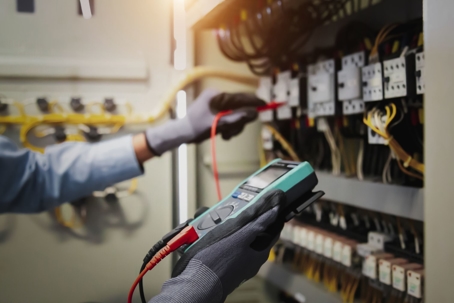
Before we talk about warning signs, it helps to understand what an electrical audit really is. An audit is a structured, whole home evaluation of your electrical system. We look at the main panel, individual circuits, wiring types, grounding, and protective devices like GFCI and AFCI, and we focus on three things: safety, capacity, and how well the system matches the way you use your home today.
This is different from a basic home inspection that might have been done when you bought the house. Home inspectors typically perform a visual check and test some outlets and lights to see if they turn on. They usually do not open panels to look at wiring terminations in detail, calculate loads on circuits, or trace how major appliances are supplied. An electrical audit takes that next step and looks deeper at how your system is actually built and loaded.
In a typical home, our audit starts at the main electrical panel, which is the heart of the system. We look at breaker sizes, available spaces, labeling, and visible signs of overheating or corrosion. We often map which rooms and appliances are tied to which breakers, then sample outlets, switches, and fixtures in key areas, checking for proper grounding, correct polarity, and any discoloration, buzzing, or looseness. We also look for missing GFCI protection in kitchens, bathrooms, garages, and outdoor locations, and we note whether AFCI protection is present in areas where it is required in newer work.
Because we have been working for more than five decades, we have a strong sense of what is typical for homes built in different eras. That context helps us distinguish between quirks that are common for an older home and conditions that call for attention. The result of an audit is not just a punch list, but a prioritized overview of your electrical system that you can use to plan safety improvements and future upgrades.
Sign 1: Breakers That Trip More Than Occasionally
Every homeowner has had a breaker trip at some point. You might plug in a vacuum, run the toaster, and start the microwave at the same time, and suddenly part of the kitchen goes dark. One trip like that, every once in a while, usually means the circuit was briefly overloaded and did what it was designed to do. The breaker is a safety valve that opens the circuit when too much current tries to flow.
What raises concern is a pattern of trips on the same breaker. If you are walking to the panel several times a week, or you know exactly which breaker will go when you use certain outlets, that is not just a nuisance. It often means that the circuit is regularly being asked to carry more current than it should, or that there is a deeper issue such as deteriorated wiring, loose connections, or an appliance drawing more current than expected.
Think about a typical older kitchen that was wired when there was one fridge, a small countertop radio, and maybe a coffee maker. Fast forward to today and that same circuit might be feeding a microwave, air fryer, coffee maker, phone chargers, and more. If these are all tied to one or two small circuits, they can easily exceed the intended capacity. The breaker responds by tripping, which protects the wiring, but repeated overcurrent can still stress breakers and insulation over time.
During an electrical audit, we look at which circuits are serving which areas and what the likely loads are. We check whether high draw appliances like microwaves, dishwashers, disposals, window AC units, or space heaters share circuits with many receptacles. We also examine the panel to see if breakers are correctly sized for the wire connected to them. This mapping allows us to see where circuits are overloaded or misapplied, and it often leads to recommendations such as adding dedicated circuits or upgrading the panel to better handle your home’s needs.
Because our technicians focus on diagnosing the whole system, we do more than just reset a breaker or swap it out. We trace the pattern, explain what we are seeing in your panel and on your circuits, and help you understand which changes will make the biggest impact. If a breaker refuses to reset or you notice burning smells, our 24 hour availability means we can respond quickly, but those recurring trips are exactly the kind of thing an electrical audit is designed to untangle.
Sign 2: Flickering or Dimming Lights When Appliances Run
Many homeowners notice that lights dip or flicker briefly when a larger appliance kicks on. Maybe the kitchen lights dim when the fridge compressor starts, or the bathroom light flickers when a hair dryer turns on. A very small, quick change once in a while can be normal in some homes. Persistent or noticeable dimming, or lights that flicker often, tells a different story.
When a heavy load turns on, it draws a surge of current. If the wiring feeding that circuit is undersized for the combined load, or if circuits are nearly maxed out, the voltage at lights and other devices can dip more than it should. Loose connections in junction boxes, switches, or at the panel can add resistance, which not only contributes to flicker, but also creates heat at that weak point. Over time, insulation and components can degrade, leading to more frequent flickering and potentially dangerous hot spots.
Another piece of this puzzle is how circuits are laid out. In some older houses, lights and receptacles share long, winding circuits that were installed decades ago. As more fixtures and devices were added, these circuits became more heavily loaded than originally planned. Dimming that follows the pattern of certain loads, such as the furnace blower or a window AC unit, often indicates that those loads are sharing wiring and breakers that are at or beyond their comfort zone.
As part of an electrical audit, we pay close attention to these symptoms. We may check voltage at outlets or panels while certain appliances operate, and we inspect connections at the panel and select devices for signs of heat or looseness. We also look for improvised splices or backstabbed receptacles, where wires are pushed into the back of the device instead of being secured under screws. Those shortcuts can be weak points that produce both flicker and heat.
Because we work in homes every day, we often recognize patterns like whole rooms flickering when a particular appliance runs or groups of fixtures affected together. When we explain what we find, we translate that into clear options, such as reworking circuits, tightening and reterminating connections, or planning for additional capacity. The goal is not just to stop the flicker, but to address the underlying cause so your system is safer and more stable.
Sign 3: Warm, Discolored, or Buzzing Outlets and Switches
Outlets and switches are some of the few parts of your electrical system you can touch and hear. If a wall plate feels warm to the touch when a device has been running, if you see browning, melting, or cracks, or if you hear a buzzing or crackling sound when you flip a switch, those are not signs to ignore. They are often clues that something is happening at the connection point that you cannot see.
Inside an outlet or switch, wires are meant to be tightly secured under screws or in proper terminals. If a connection loosens over time from heat cycles, vibration, or installation shortcuts, it creates resistance at that point. Electricity still tries to flow, but it has to push through a small, imperfect contact. That resistance generates heat, which can make the device warm and can gradually damage plastic parts or insulation. In some cases, electricity can jump a small gap, which is called arcing, and that can create a buzzing or crackling sound.
Warmth at a device can also be a sign that too much current is flowing through it. For example, plugging multiple space heaters or high draw devices into one outlet with adaptors or power strips loads that single location beyond what it was intended to handle. Even if the breaker does not trip, the outlet itself can overheat. Over time, this can leave visible discoloration, a burnt smell, or a brittle feel to the plastic.
During an electrical audit, we do not just glance at outlets and switches from across the room. We test a sampling of devices in each area, check for proper wiring and grounding, and inspect any that show signs of heat or damage more closely. If you already know of outlets that feel warm or switches that make noise, we pay special attention to those. We may recommend replacing those devices, tightening connections, or investigating further into the wiring that feeds them.
Because this work takes us into bedrooms, living areas, and other personal spaces, our Technician Seal of Safety matters. Every technician from Knee’s Electrical Service is background checked, drug tested, and professionally trained, so you can feel comfortable with who is in your home. As we work, we protect flooring, keep our workspace clean, and communicate what we see so you are never left guessing about the condition of your outlets and switches.
Sign 4: Older Wiring, Panels, or Two Prong Outlets Still in Use
If your home still has two prong outlets, an older electrical panel with no open spaces left, or visible cloth covered wiring in the basement or attic, you are dealing with an electrical system that was designed for a different era. Many of these systems have been in service for decades. They may still “work,” but they were not built with today’s number of electronics, larger appliances, or modern safety protections in mind.
Two prong outlets are a clear sign that circuits may lack a proper equipment grounding conductor. Grounding is a safety path that gives stray current a low resistance route to return if something goes wrong, such as a short to a metal appliance case. Without it, the risk of shock increases. Plug adaptors that turn three prongs into two do not create a real ground; they just make it possible to physically plug in a cord. That does not match the level of safety modern standards aim for.
Older panels raise their own concerns. Panels that are full or that rely on many tandem breakers may be at or near their intended capacity. In some homes, new circuits were added in creative ways over the years, including multiple wires under one breaker or improvised connections in junction boxes. As load grows, undersized or crowded panels can run hotter and can leave you with few options for safely adding new circuits when you renovate or add equipment.
Protection devices have also improved. Many older homes predate current expectations for GFCI protection in kitchens, bathrooms, laundry areas, garages, and outdoor outlets, and AFCI protection in certain living spaces. GFCI devices help protect against shock in wet or damp locations by cutting power quickly when they detect an imbalance in current. AFCI devices are designed to detect certain arcing conditions that can lead to fires. The absence of these protections in the right locations is a sign your system has not kept pace with modern safety practices.
During an electrical audit in an older home, we pay close attention to wiring types, panel condition, and the presence or absence of modern protection. We note where two prong outlets remain, where GFCI and AFCI are missing, and whether the panel seems appropriate for the number and type of circuits it serves. Because we have worked on many of the same houses across generations, we recognize older installation styles and can often anticipate where hidden junction boxes or older splices might be located. From there, we help you prioritize which upgrades will give you the most safety and flexibility for future projects.
Sign 5: You Have Added Major Loads Without Upgrading the Electrical System
Many homeowners have steadily upgraded their homes without giving much thought to the electrical backbone. Central air added to a house that once had only window fans, a tankless water heater, a hot tub on the back patio, an EV charger in the garage, or a finished basement with more lighting and outlets; each of these new features adds significant electrical demand. If the panel and circuits were never updated to match, the system may be carrying more than it was designed for.
Every major appliance has a current draw measured in amps. A gas furnace blower, electric oven, clothes dryer, or air conditioner can each put a substantial load on the system. Many of these should be on their own dedicated circuits, which means that the circuit serves only that appliance. When multiple large loads share circuits, or when new equipment is tied into whatever space was available in the panel, you may start to see tripping breakers, dimming, or warm equipment, especially at peak usage times.
Sometimes the warning signs are subtle at first. You might notice that the garage lights dim when the EV starts charging, or that the breaker feeding the new basement rec room trips every few weekends when you have guests and more devices plugged in. Over time, as more devices are added, these small signs can become more frequent. The underlying issue is that the home’s demand has grown, but the capacity has stayed the same.
In an electrical audit, we ask about recent or planned changes, such as new HVAC equipment, water heaters, hot tubs, EV chargers, workshops, or additions. We then look at how those loads are supplied, verify whether they are on dedicated, correctly sized circuits, and assess whether the main panel has sufficient capacity for them plus the rest of your home. In some cases, the recommendation might be a panel upgrade, the addition of a subpanel, or the reconfiguration of existing circuits to balance loads more safely.
Our team at Knee’s Electrical Service frequently helps homeowners through this process. We do not just say you need more power and leave you to figure it out. We walk you through what your current panel can handle, where your biggest loads are, and what options you have to support your home today and in the future. That way, your upgrades feel like improvements, not hidden risks.
What We Check During an Electrical Audit in Your Home
By the time you see two or three of these signs in your home, it is natural to wonder what an electrical audit visit actually looks like. Our goal is to give you a clear picture of your system without disrupting your household. We start by asking about any symptoms you have noticed, like specific breakers that trip, rooms where lights flicker, or outlets you are concerned about. That helps us focus on the areas that matter most to you while still performing a thorough review.
Next, we move to the main panel. We remove the cover, check breaker sizes, look for signs of heat or corrosion, and confirm that each breaker has an appropriate number of conductors connected. We take note of open spaces, tandem breakers, and any obvious labeling issues. From there, we sample outlets and switches in key rooms, especially kitchens, bathrooms, laundry areas, and outdoor spaces, to check grounding, polarity, and the presence of GFCI where it is expected.
We also look at visible wiring in basements, attics, and garages when accessible. This can reveal older wiring types, junction boxes that have been added over time, or signs of DIY changes. Throughout, we keep an eye out for warm devices, discoloration, buzzing, or other physical clues. We keep track of what we find so we can organize it into a clear set of observations, rather than a collection of unrelated notes.
Once the inspection is complete, we review our findings with you in plain language. We typically group recommendations into safety-critical items, capacity or reliability concerns, and convenience or future planning improvements. This might include ideas like adding GFCI protection in certain locations, correcting overloaded circuits, planning a panel upgrade, or replacing damaged devices. You can ask questions about any item, and we explain the why behind each suggestion so you can make informed choices.
Throughout the visit, you can expect clean, respectful service. Our technicians wear protective gear as needed, work to keep their area tidy, and leave your home as they found it. They are background checked, drug tested, and carry the Technician Seal of Safety, so you can feel comfortable from the moment we call ahead to the moment we finish reviewing your audit report.
Why Homeowners Call Knee’s Electrical Service for Electrical Audits
For many homeowners, the hardest part is deciding whether the signs in their house justify calling someone. If you recognize frequent breaker trips, regular flickering lights, warm or buzzing devices, older wiring and panels, or new heavy loads added to an older system, an electrical audit turns those scattered concerns into a clear picture. Instead of guessing, you get a prioritized plan for making your electrical system safer and more reliable.
Families have trusted Knee’s Electrical Service with that kind of work since 1971. Our long history in the community, A+ rating with the BBB, and recognition from Angi and HomeAdvisor reflect the way we approach every home, with careful diagnostics, respect for your space, and clear communication from start to finish. We stand behind our work, and if something is not right, we work with you to make it right because our reputation depends on the relationships we build with our neighbors.
If you have been resetting the same breaker again and again, living with flickering lights, or wondering about those old two prong outlets, it may be time to have a professional look at the whole system. An electrical audit from Knee's Electrical Service gives you answers, not just quick fixes, and helps you plan the next steps that fit your home and budget. To schedule an electrical audit in your home or ask questions about your specific situation, call us today.